Dogs don’t sit still on command, don’t fake a smile, and don’t care that you booked a session. That’s exactly why good portraits of them feel so rewarding when you get them. If you’ve been searching for pet photography near me and want shots that actually look like your dog, a little prep before the session does most of the work.
Why Photograph Your Dog at All
Dogs age fast. The puppy phase lasts months, the gray muzzle creeps in before you’re ready, and most of the photos you have are blurry phone shots from across the room. A real session gives you images you’ll keep on the wall long after, and a lot of people end up wishing they’d done it sooner.
There’s also the simple fact that your dog is part of the family. A lot of folks want portraits of their pets the same way they’d want them of their kids. The session itself tends to be fun too, since it’s just you and your dog doing things they already like.
Get Your Dog Ready
The session goes smoother when your dog shows up in the right headspace. A few small things on your end change the whole day.
Burn Off Energy First
Take your dog for a long walk or a good play session before the shoot. A tired dog is a calm dog, and a calm dog actually holds still long enough to photograph. Showing up wound up means chasing them around for an hour.
Skip the Big Meal, Keep the Treats
Don’t feed a heavy meal right before, but do bring a bag of the treats your dog goes crazy for. Treats are how a photographer gets ears up and eyes locked on the camera. Bring something with a strong smell, since that holds attention better than the everyday kibble.
Bring the Favorites
Pack a couple of toys, especially a squeaky one. The sound snaps a dog’s focus right to the camera for a second, which is all a photographer needs. A favorite blanket or bed can also help an anxious dog settle in a new place.
Where to Shoot Around Town
St. Augustine gives you a lot of settings that suit dogs, from open sand to shaded paths.
The Beach
Dog-friendly stretches of beach give your dog room to run and you a clean backdrop of sand and water. Morning is the move, since the sand stays cool and the crowds are thin. Watch the heat on paws later in the day. Bring water for your dog no matter what.
Parks & Trails
Shaded trails and grassy parks give you greens and dappled light that frame a dog well. These work for dogs who do better with a little structure and a leash. The leash can come out of the shot in editing, so don’t stress about keeping them off it.
Around the House
If your dog gets nervous in new places, your own yard or living room might give you the most natural shots. Dogs relax where they know the smells, and a relaxed dog photographs better than one on edge in a strange spot.
Working With Your Dog’s Personality
No two dogs shoot the same. A high-energy dog gives you action shots: running, jumping, ears flopping. Lean into that instead of fighting it. A mellow older dog gives you calm, soulful portraits where they just look at the camera. Both make good photos; they just call for a different approach.
For Shy or Anxious Dogs
Give the session more time and fewer expectations. Let your dog sniff around and get used to the photographer before anything starts. Stay calm yourself, since dogs read your stress and mirror it. The photos come once they settle, so don’t rush.
For Hyper Dogs
Use the energy. Action shots of a dog mid-run or catching a toy often beat the sit-and-stay frames anyway. Bring extra treats and toys to reset their attention between bursts.
Getting the Eyes
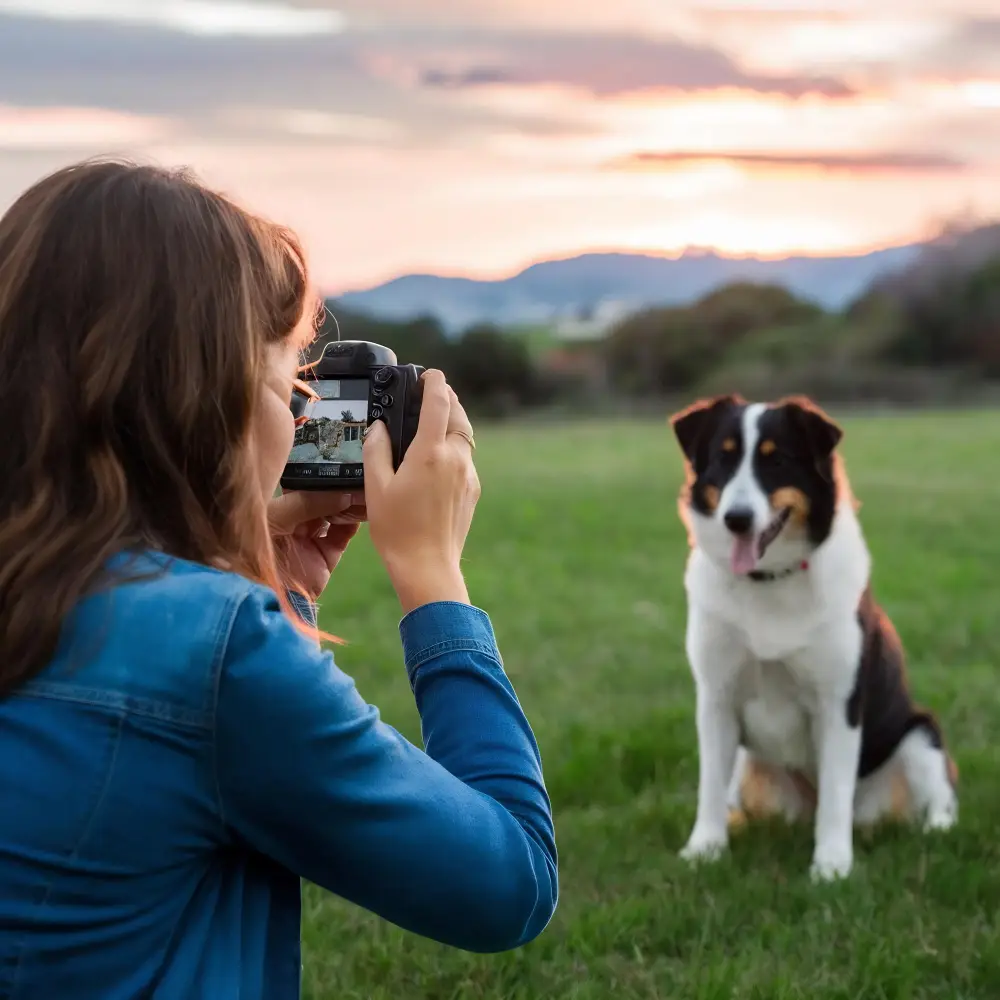
The shot most people want is the one where the dog looks right at the camera. This is where treats and squeaky toys earn their keep. Hold a treat near the lens, make the squeak, and you’ll get a second of focus. A photographer who knows dogs will work fast in that window.
Don’t force it for too long. Dogs get bored and check out if you push the same trick over and over. Mix it up, take breaks, and let them move around between attempts.
Searching for the Right Fit
When you look up pet photography near me, find someone who’s worked with dogs before and seems relaxed around them. A photographer who rushes or gets frustrated will stress your dog out, and it’ll show in the photos. Someone patient who lets the dog set some of the pace gets the shots that look like your actual dog instead of a posed stranger.
Plan the Day
Pick a time of day with soft light, usually early morning, and a spot your dog feels good in. Pack treats, toys, water, and a little patience. Walk your dog beforehand so they show up settled. Get those pieces lined up and the session turns into a good afternoon with your dog that happens to end with portraits you’ll keep for years.